
01
Learn the skill
Learn the technique, its purpose, and the safety details.
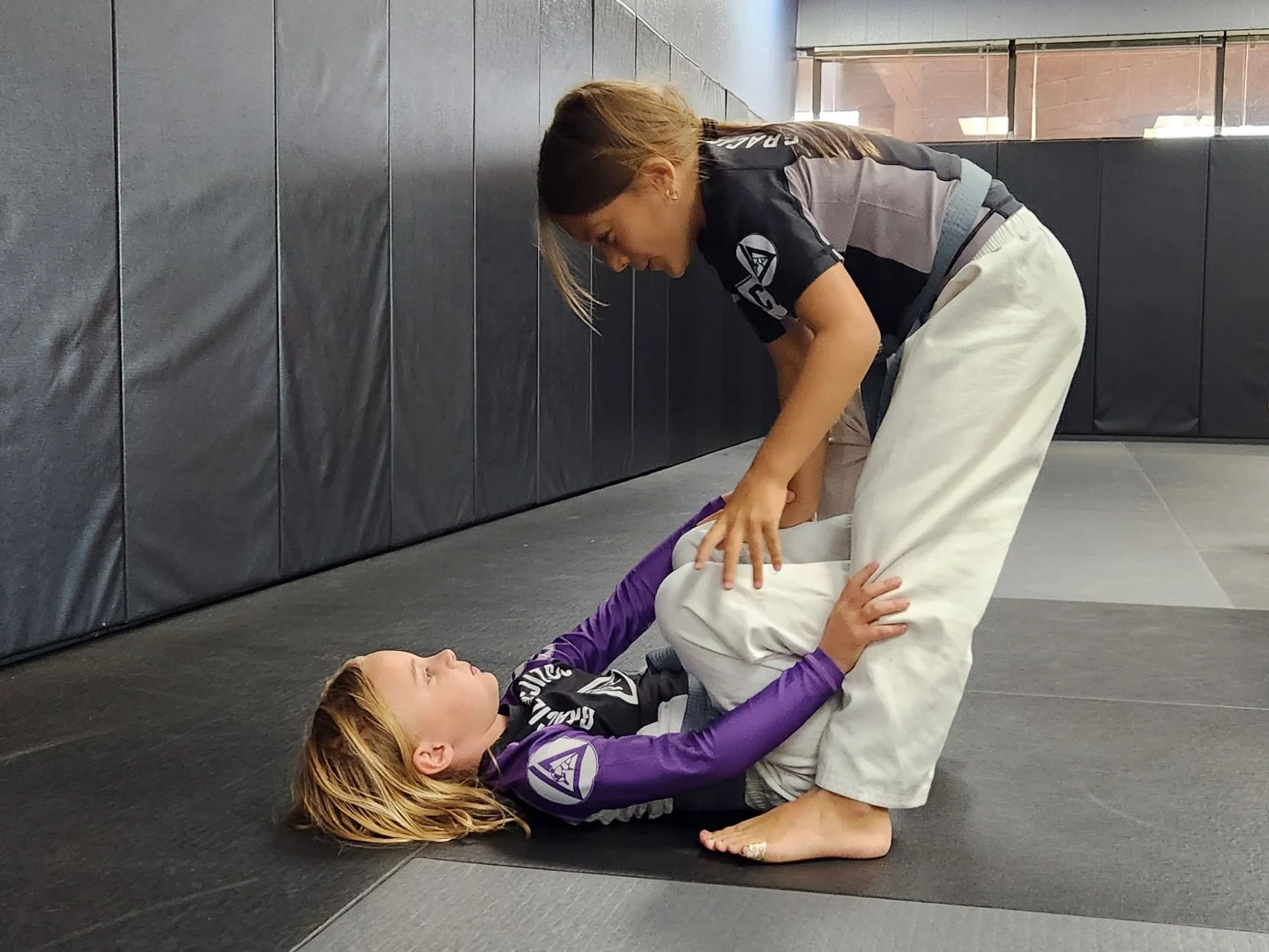
Youth Brazilian Jiu-Jitsu · Ages 8–13 · Chandler, AZ
Serious jiu-jitsu with room for fun. Young people learn to grapple, solve problems under pressure, and build the practical ability behind a confident “no.”
Boundaries and self-defense
We teach students to speak up, establish boundaries, and stand up for themselves. Saying “no” can be difficult when you're afraid of what might happen if someone ignores it.
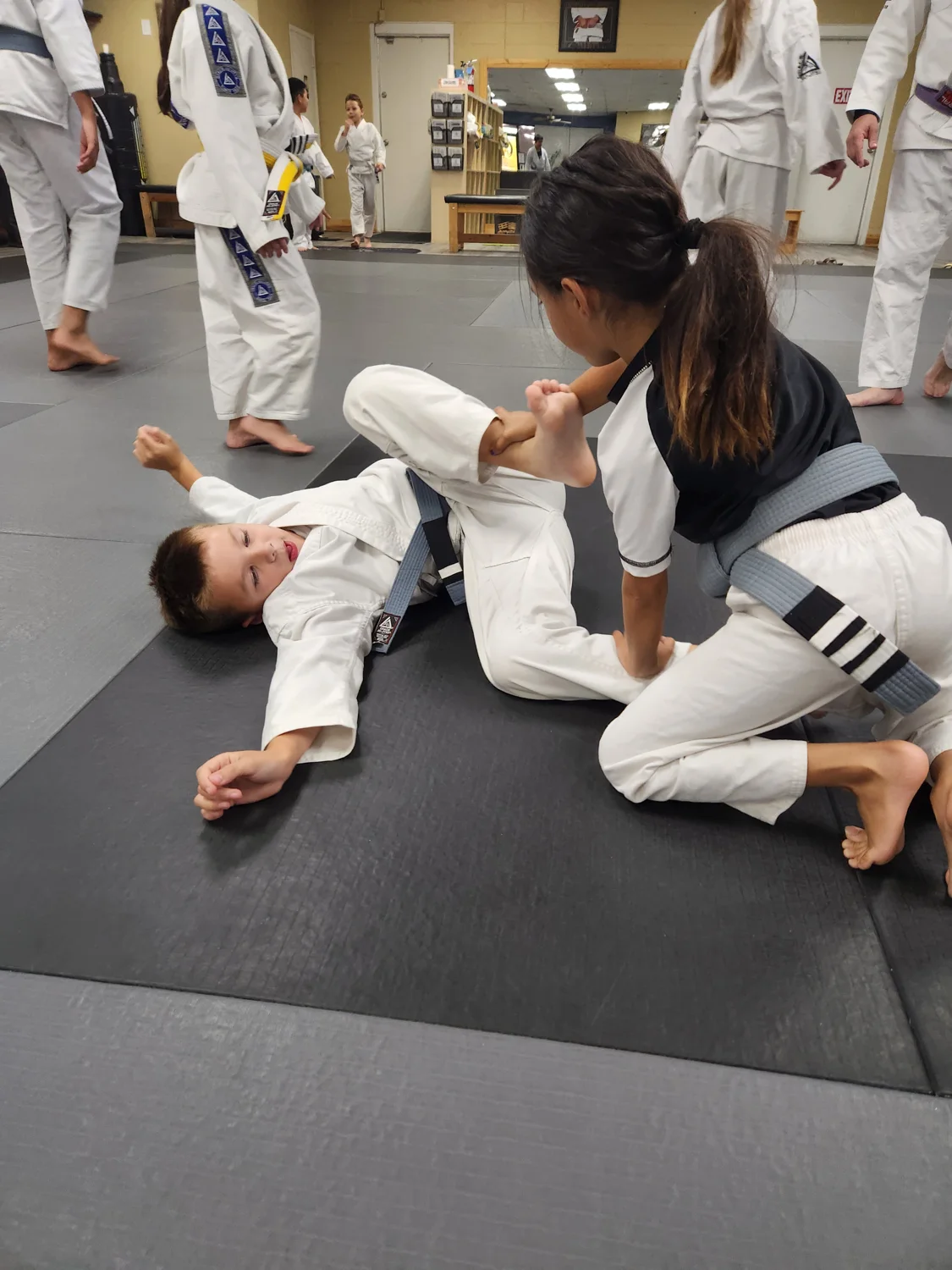
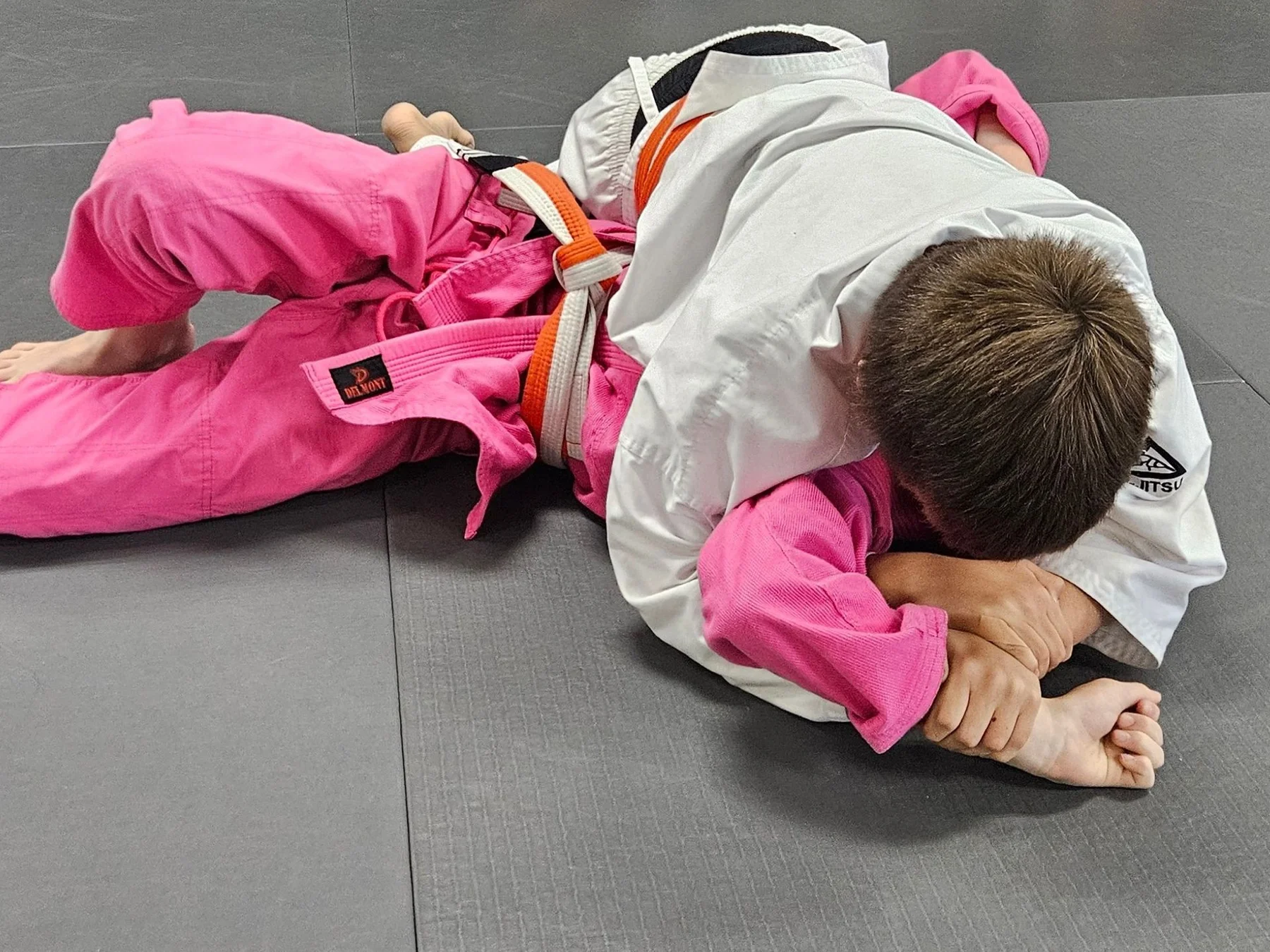
Students practice escapes and control with partners who resist. When an escape doesn't work the first time, they get a chance to adjust and try it again.
The goal is to avoid unnecessary confrontation and make better decisions: stay calm, leave when possible, and get help from trusted adults. Physical skills give students more options when words alone aren't enough.
“My boys love coming to class, and the coaching style has helped them build confidence and stay focused.”
Old enough for the real subject
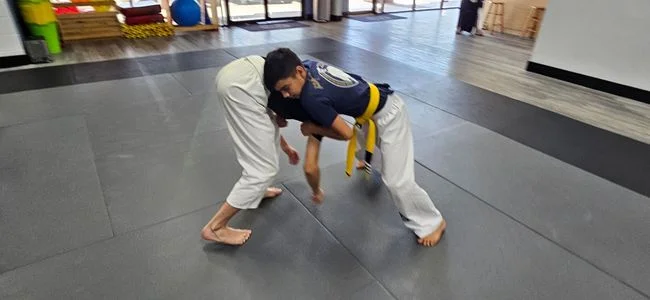
Youth students learn takedowns, positions, escapes, control, and submissions for self-defense and sport. Techniques connect to real-world situations and partner challenges that build body control, independent judgment, and the ability to respond under pressure.
Students practice cooperation, work through disagreements, and care for their partners. Taking responsibility for decisions and helping peers gives them opportunities to lead. Beginners are welcome, and competition is optional.
Learn the technique, its purpose, and the safety details.
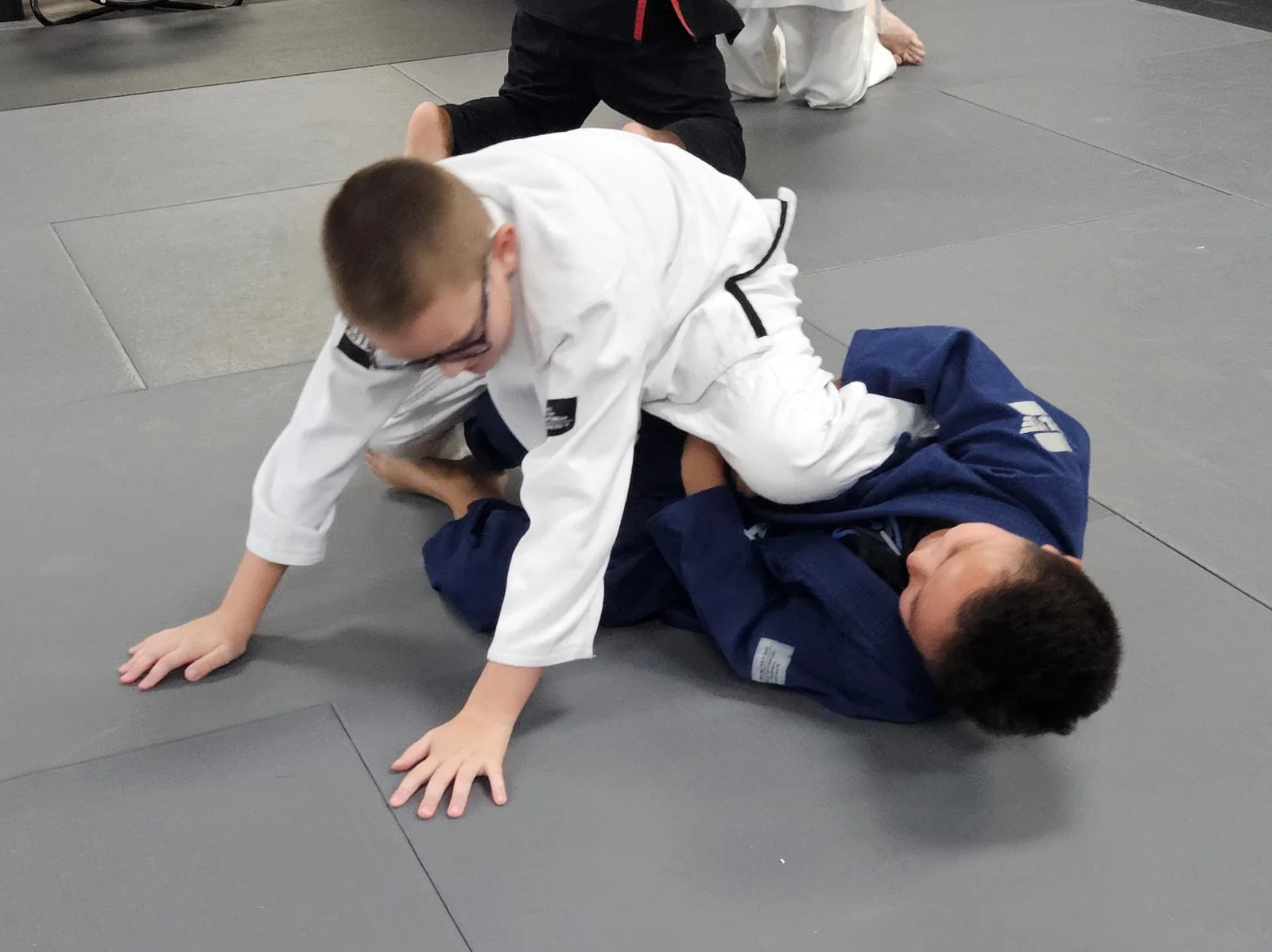
A partner resists and changes the problem. Students think critically, test ideas, and adjust when an approach fails instead of waiting for the coach's answer.
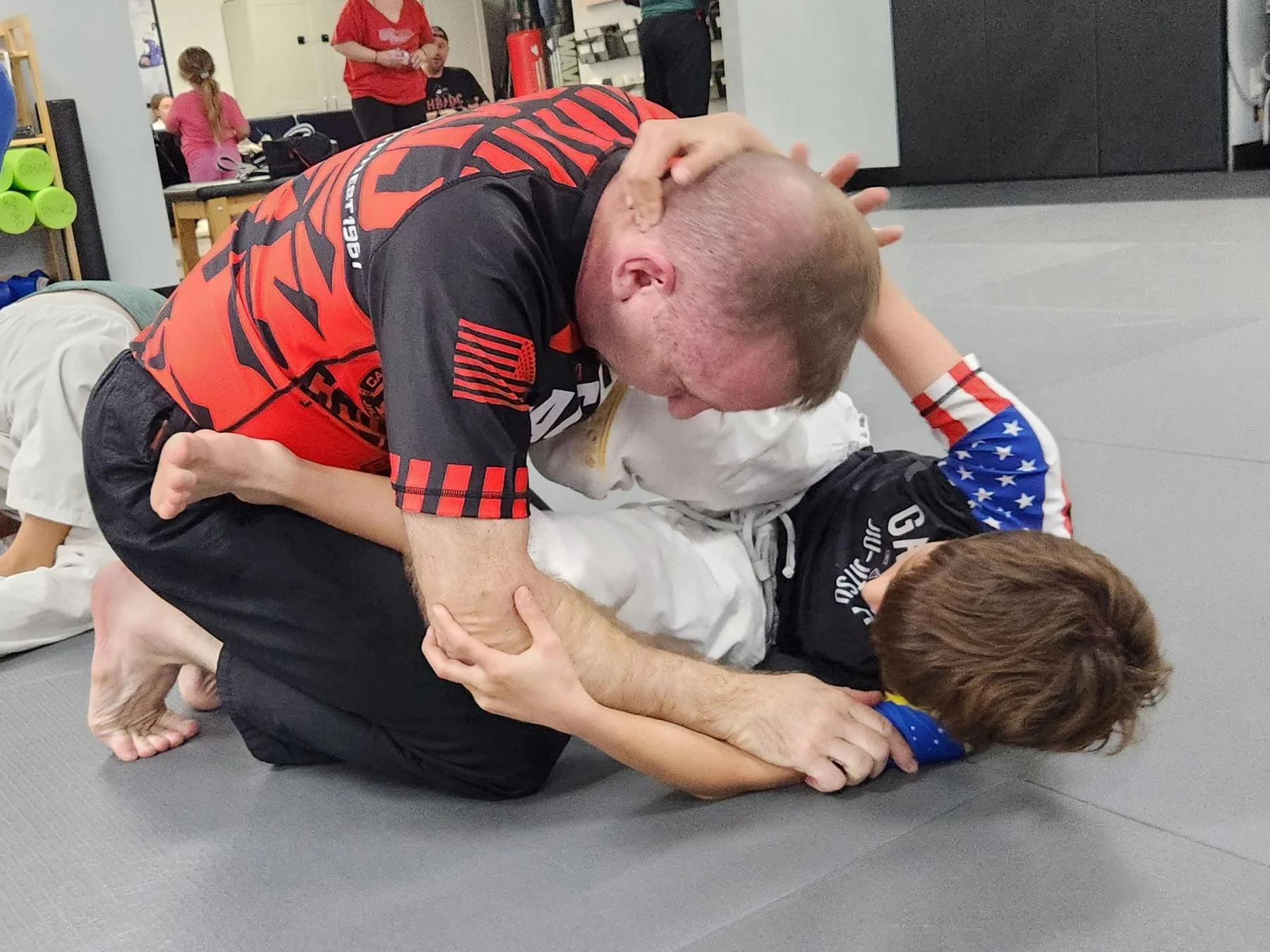
Supervised sparring develops skill under pressure and respect for partners. Students learn from losses, try again, and take pride in one another's progress.
No. Students may train for self-defense, fitness, sport, or enjoyment. Competition is available for those interested.
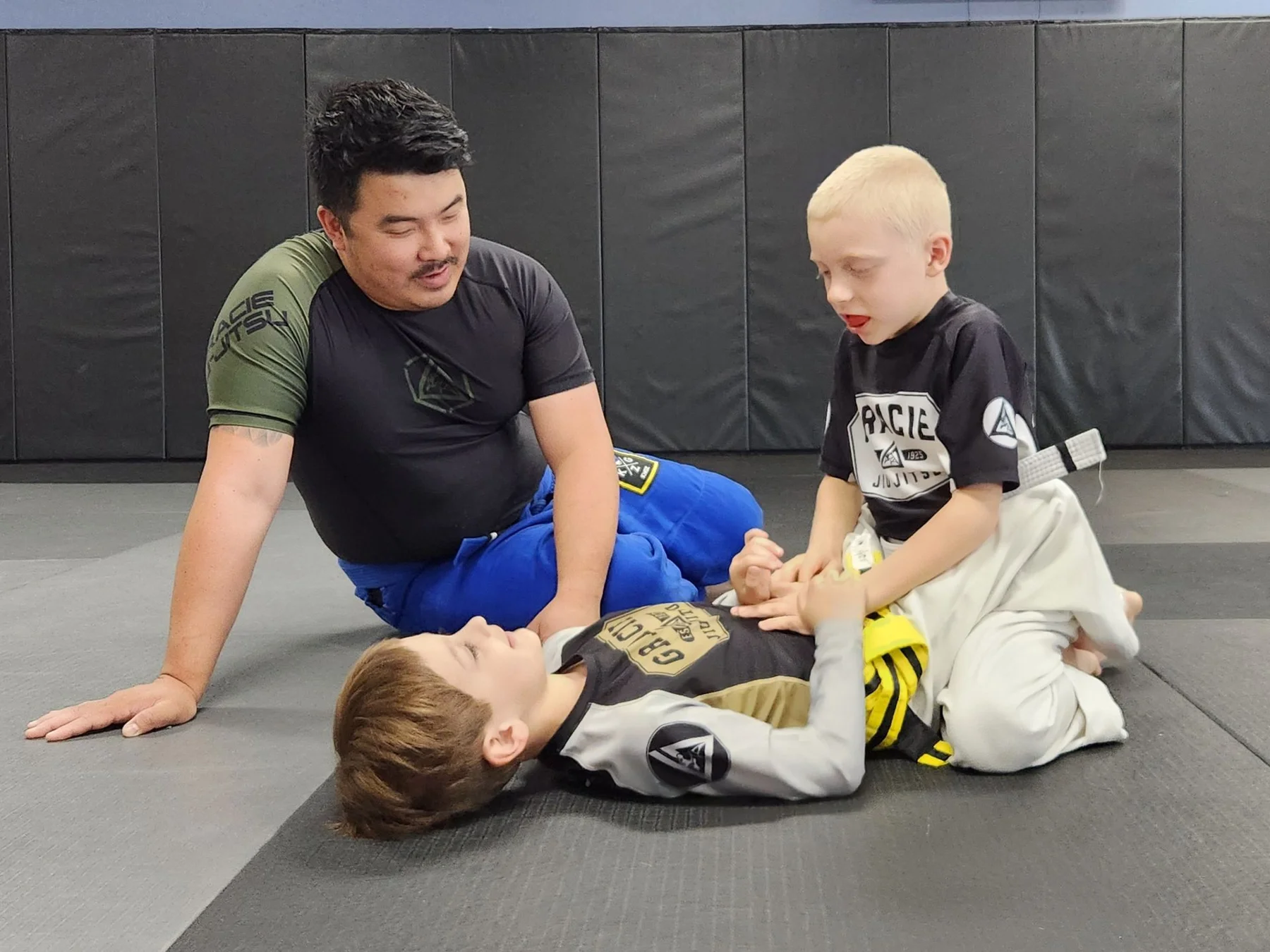
Yes. Students play games with a clear goal, such as escaping from underneath a partner. They also do supervised sparring, with coaches adjusting the challenge to their experience.
Beginners are welcome. Coaches explain the basics and scale partners and difficulty.
Youth ages 8–13 work on more detailed techniques, realistic situations, and independent judgment. Kids ages 5–7 use more playful framing.
Yes. Parents can observe. Eligible ESA tuition is invoiced separately from other family members. See ESA details.
Youth students learning through coaching and partner practice.
Start your free 7-day trial
Come train for a free week. We'll help new students find their starting point.
4.9 ★ · 164 Google reviews ↗