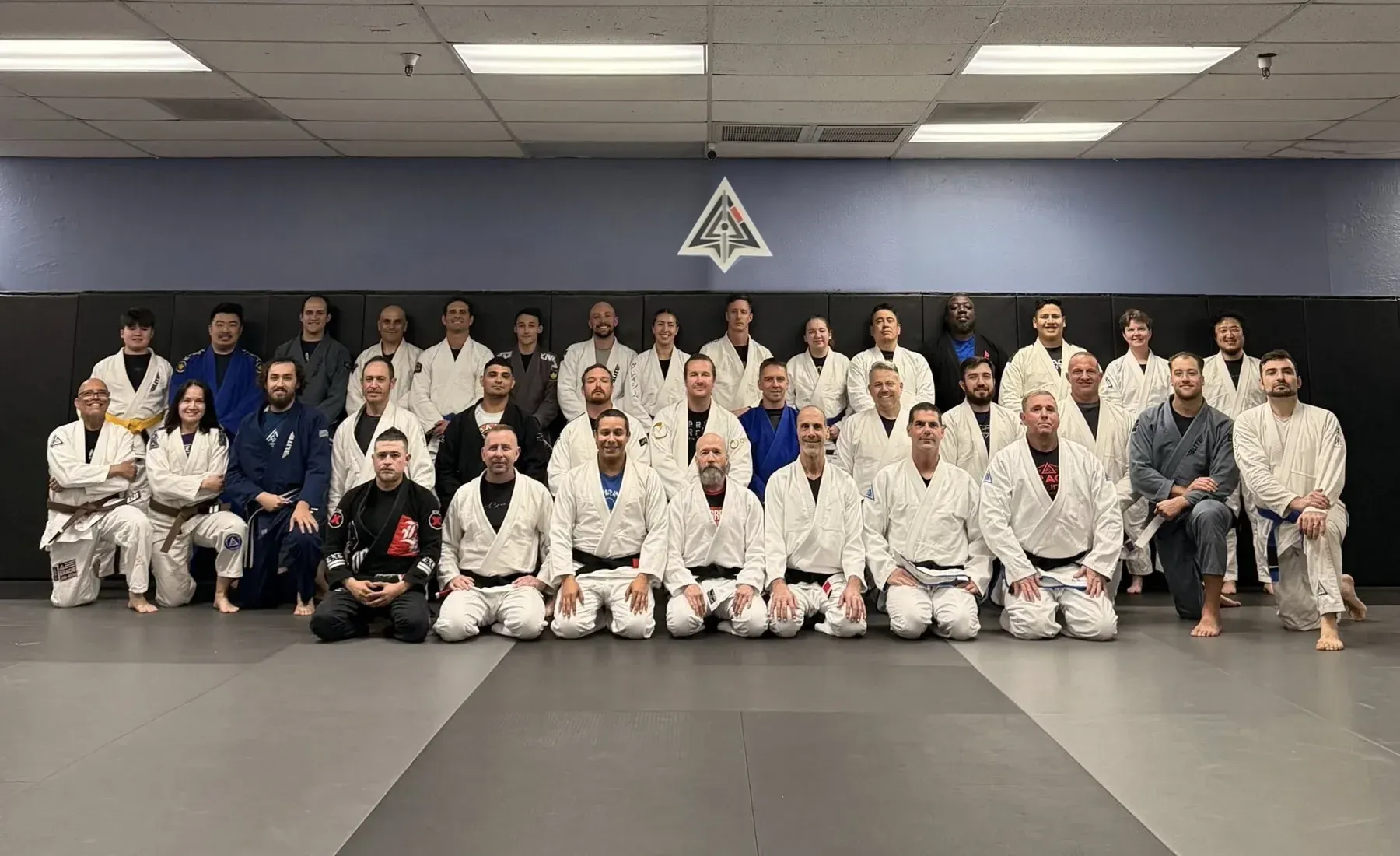
Some people discover Brazilian Jiu-Jitsu because they want to defend themselves. Others enjoy the puzzle of grappling, the athletic challenge, or the community. Those reasons can all lead to the same place: a deeper understanding of jiu-jitsu.
We study how to close distance, stay safe, bring someone to the ground, control positions, escape trouble, and apply techniques responsibly. Sometimes we're wearing a gi. Sometimes we're not. Sometimes we're solving a sporting problem. Sometimes we're considering a real-world encounter. The underlying principles connect it all.
We explain techniques step by step, then use drills, purposeful games, and live resistance to explore them. Critical thinking is a goal at every age: students ask questions, test ideas, and make decisions rather than wait for every answer. When an approach fails, they learn to work out why, try again, and adapt.
Good partners make this possible. Coaches scale the challenge; students give useful resistance, communicate limits, and respect the tap. They learn to take a loss as feedback and celebrate a partner's progress as well as their own. Cooperation and challenge belong together.