
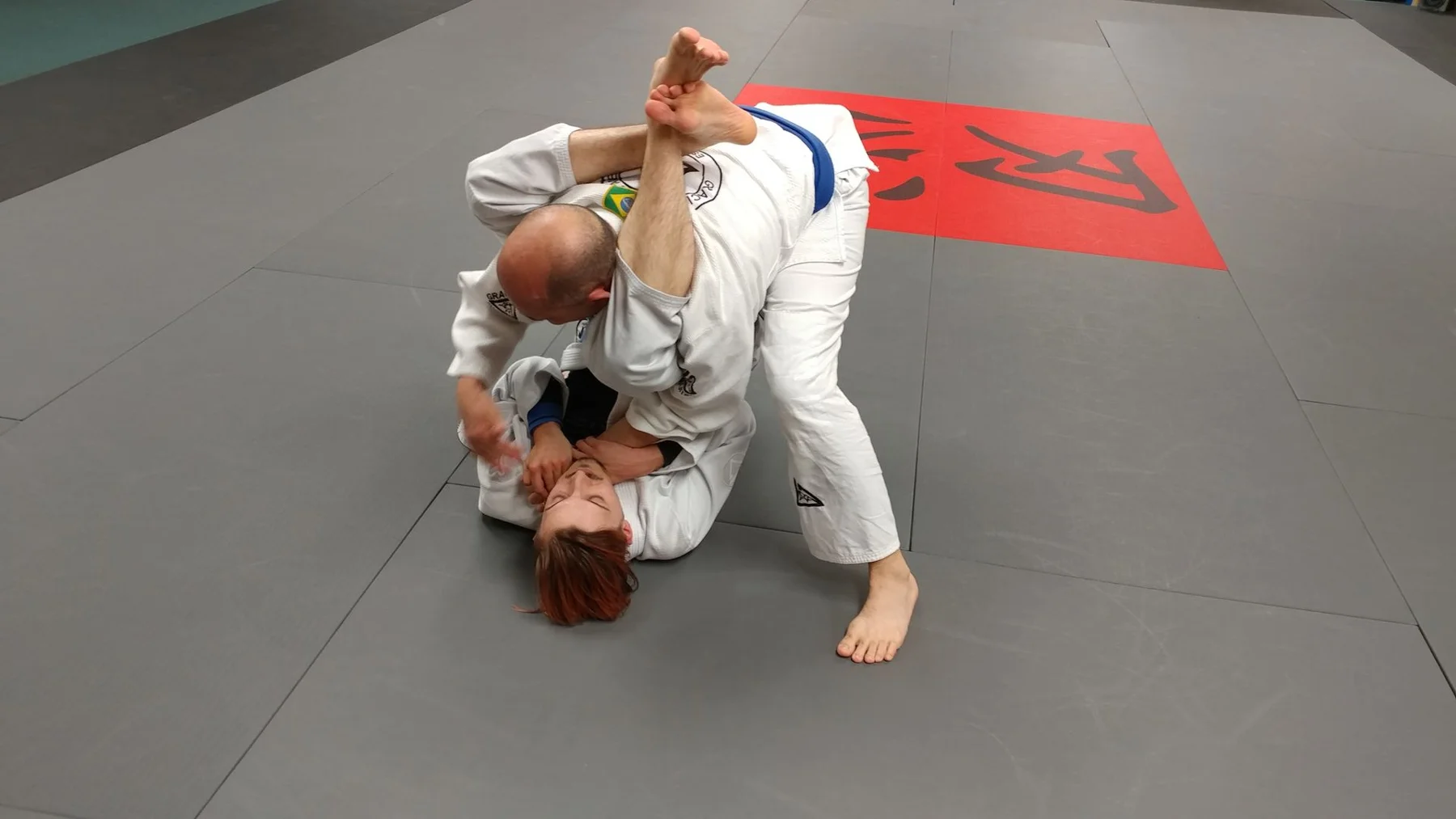
You don't have to arrive knowing what to do.
Walking onto the mats for the first time means stepping into something unfamiliar. The positions, the vocabulary, and even how to move with a partner may be new. That is a reasonable place to begin. At Centerline, students learn the art through instruction, practice, and experience with other people. You do not need to have the answers before you start.
Understand the problem. Then explore it.
Direct instruction gives you a starting point: what you are trying to accomplish, how a technique works, and the safety details that matter. Task-based games give that idea a job. Rather than repeating a movement while a partner waits, you work toward a specific goal against meaningful resistance. Your partner responds, and you learn to adjust.
Live practice has a purpose.
Positional sparring focuses on a particular situation. Full sparring connects situations as they change. Partners, intensity, and rules should fit the experience of the people training. Respect for the tap and care for your partner are part of learning jiu-jitsu, not details to save for later. It is fine to ask questions when something is unclear.
Getting stuck is part of learning.
Some days an idea makes sense immediately. Other days you find the same problem again and again. We want students to practice staying present, accepting feedback, and making another choice. The goal is not to look tough on day one. It is to build skill you can rely on through patient, repeated practice.
Find the program that fits.
Our Adult & Teen program brings beginners and experienced students into the same connected study of jiu-jitsu. We also offer a women-only program and age-specific children's programs. Look at the schedule, read about the options, and come with questions. The first step is finding a place where you can learn.